Control Joint Sealing
We seal saw cut control joints in floors, hardstands and car parks, preventing water, dirt and debris from entering and damaging slab edges and the subgrade beneath.

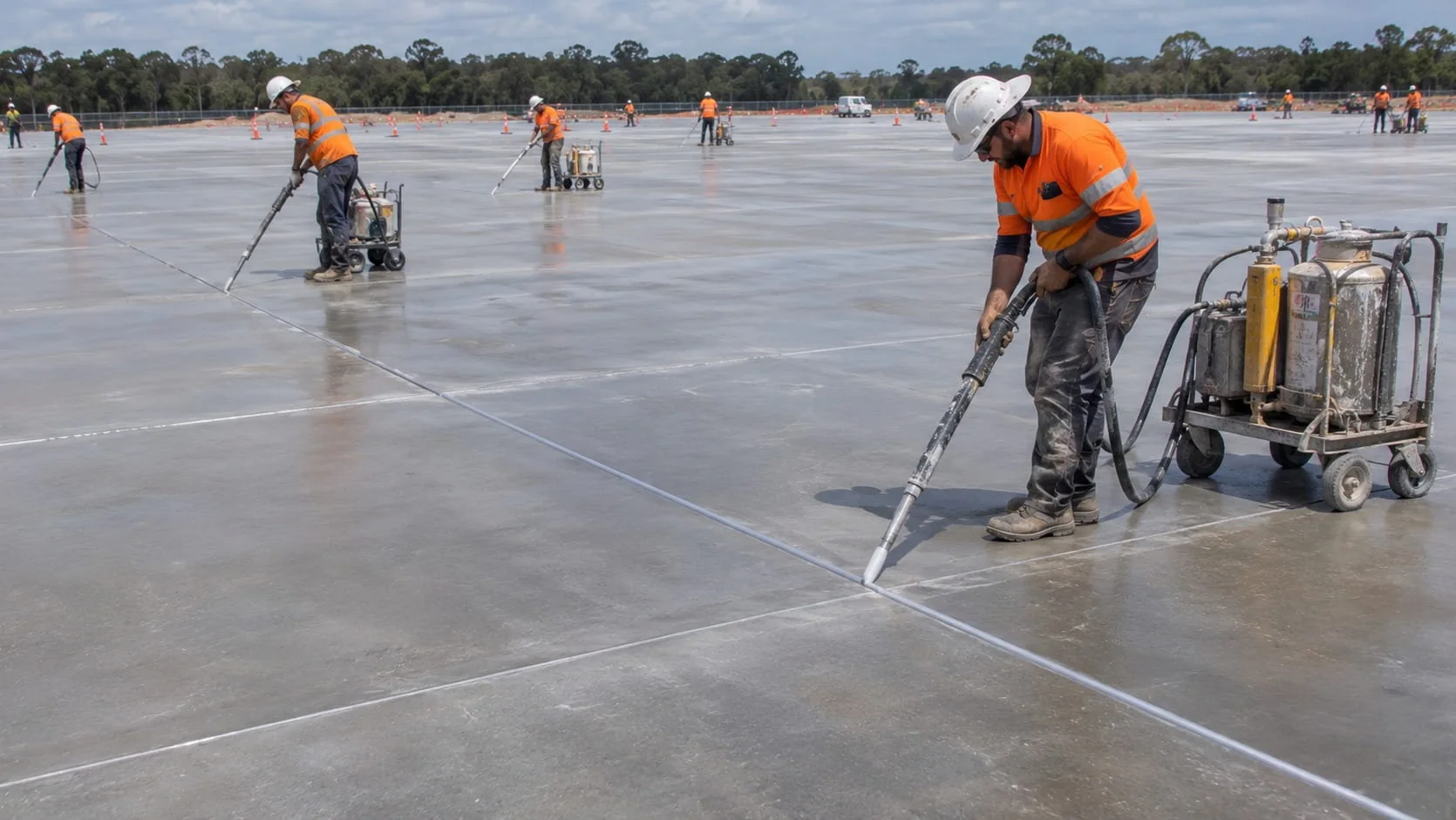
Joint sealing
Joint sealing that protects concrete edges and keeps water and debris out of joints.
Clear scope. Clean result.
Joint sealing in Auckland protects concrete from water ingress, debris and edge damage, extending the life of slabs and hardstands. We seal control, construction and expansion joints in warehouse floors, car parks, yards and industrial surfaces. Correct preparation and the right sealant for the application keep joints performing under traffic and movement. Unsealed or failed joints lead to spalling, subgrade damage and costly repairs, so regular maintenance pays off. We can complete sealing as part of a new build or as a maintenance service. Get in touch to discuss your joint sealing needs.
We seal saw cut control joints in floors, hardstands and car parks, preventing water, dirt and debris from entering and damaging slab edges and the subgrade beneath.
Flexible sealants accommodate slab movement at expansion and construction joints, maintaining a watertight seal and protecting structures from stress, leaks and edge deterioration.
Semi-rigid fillers support joint edges against forklift wheel impacts, reducing spalling and keeping warehouse floors smooth, safe and efficient for materials handling equipment.
We choose sealants to suit your environment, including chemical exposure, UV, temperature and traffic loads, so joints stay sealed and perform for as long as possible.
Joints are cleaned, dried and primed before sealing, giving the sealant a strong bond and preventing early failure that leads to leaks and additional repair costs.
We seal joints as part of new construction or as a scheduled maintenance service, helping you protect your slabs and avoid expensive deterioration over time.
What shapes the price
No two sites price the same. These are the factors that move a joint sealing quote most.
The total linear metres of joint and the number of individual joints to be sealed govern the sealant volume and the labour to apply it.
Polyurethane, polysulphide or semi-rigid epoxy sealants differ in price, and the grade specified for the exposure sets the material cost.
Cleaning, routing and fitting backer rod to the correct depth before sealing is essential groundwork that adds labour to each joint.
Wider joints designed for greater movement need more sealant and careful tooling, so the joint geometry influences the final cost.
Capability in context
Failed joints let water and debris attack slab edges and the subgrade, leading to spalling and expensive repairs. Our Auckland team cleans, dries and primes every joint before sealing, then selects products to suit your traffic, temperature, UV and chemical exposure. For warehouse floors, we use semi-rigid fillers that support joint edges against forklift impacts. We can seal joints during a new build or as part of a planned maintenance programme. If your joints are open, damaged or unsealed, we can assess them and restore protection quickly.
Scope clarity
This joint sealing quote sets out the preparation, backing and sealant we install, with movement design confirmed separately
Why choose us
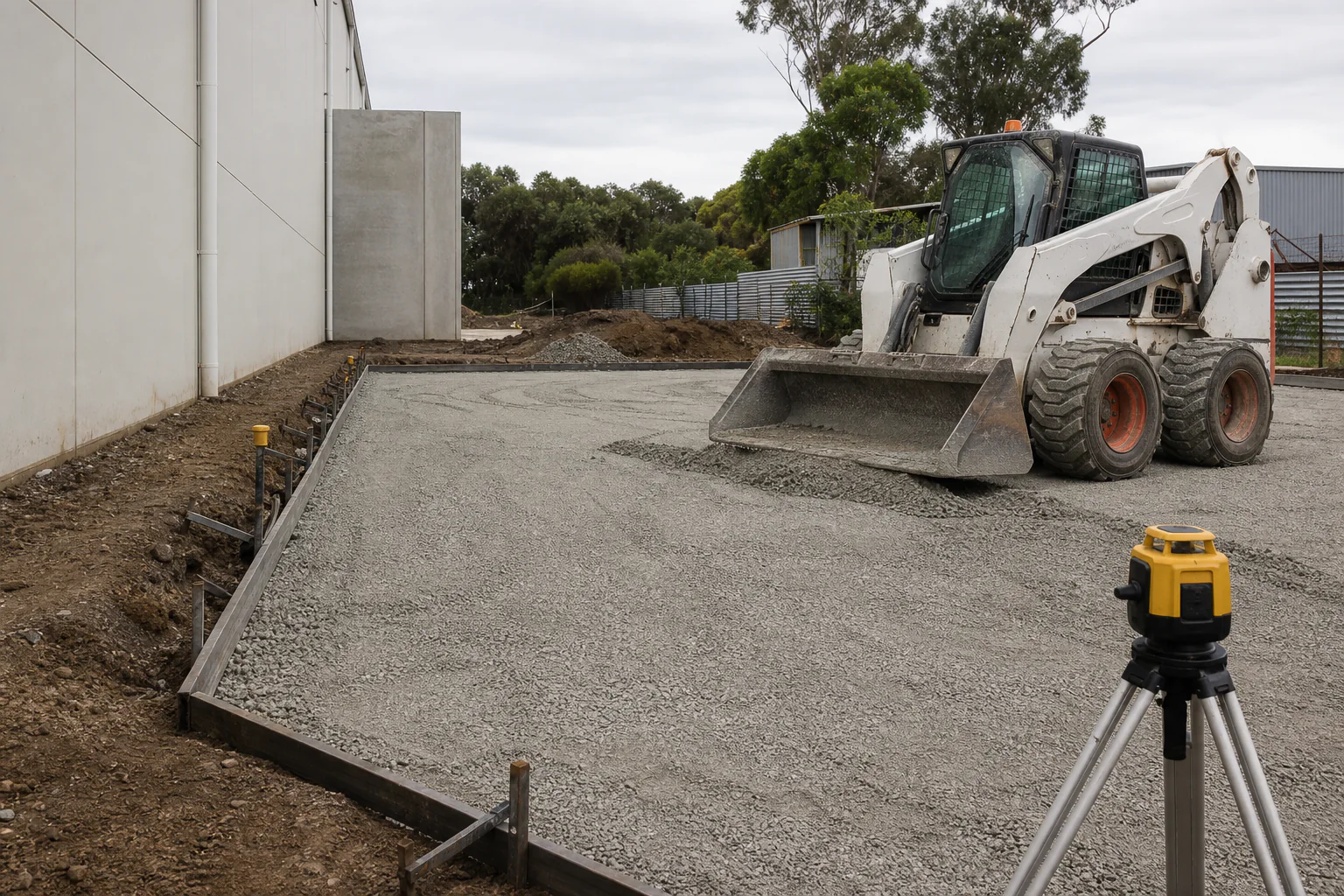
Joint sealing that protects concrete edges and keeps water and debris out of joints. Choosing the right team for joint sealing comes down to detail: who sets the levels, who owns the finish, and who is actually on site when a decision needs making. We keep that in-house, so your joint sealing is run by the people doing the work rather than passed down a chain of subcontractors who have never seen the ground.
From the first site visit through to final handover we keep your joint sealing moving — plant matched to the access and volume, a written scope you can hold us to, and a crew that leaves the site clean and on levels. Typical work spans control joint sealing, expansion joints, car park joints and slab perimeters, and every job is priced on what is actually there, not a rounded guess made from an office desk.
Before machinery arrives
A little preparation makes joint sealing faster, safer and better value. Here is what helps most before our Auckland crew mobilises to site.
Let us know the access width, height limits and any gates or neighbours involved, so the plant for your joint sealing arrives able to get to the work.
Plans, levels and any service information let us set the joint sealing out accurately and dig or pour clear of what is already underground.
Decide early whether spoil from the joint sealing stays on site, is spread, or is carted away — it changes both the method and the price.
Tell us about timing, trading hours, soft ground or anything else that affects the joint sealing, and we build it into the programme up front.
Frequently Asked Questions
We service the Auckland metropolitan area and can assess regional or rural projects by arrangement. Add your location to the quote request and we will confirm availability.
That depends on the scope, access and information available. Straightforward work may be assessed from plans and photographs, while complex sites usually benefit from an inspection.
Requirements vary by council, property and project scope. Confirm the applicable building and resource consents before work begins; we can help identify questions to raise with the relevant authority.
The service range covers residential, rural, commercial and civil work. Final suitability depends on access, programme, plant requirements and the confirmed project scope.